
November 11, 2025
Every year, America takes a day to honor its veterans. The flags come out. The speeches get recycled. Restaurants hand out free meals, and corporations run ads about gratitude. And then, by the next morning, everything goes quiet again.
The same politicians who talk about “supporting our heroes” go right back to cutting budgets, questioning disability claims, and ignoring the human cost of the wars they sent others to fight.
It’s the same performance, year after year, a ritual of comfort for everyone except those who actually served.
The Illusion of Honor
We’ve built a culture that loves the image of the veteran but struggles with the reality of the veteran. It’s easy to honor an idea, the strong, stoic warrior. It’s harder to honor the human being who’s carrying trauma, fighting bureaucracy, or living on the margins.
And let’s be honest, not every veteran fits neatly into the story America wants to tell about itself.
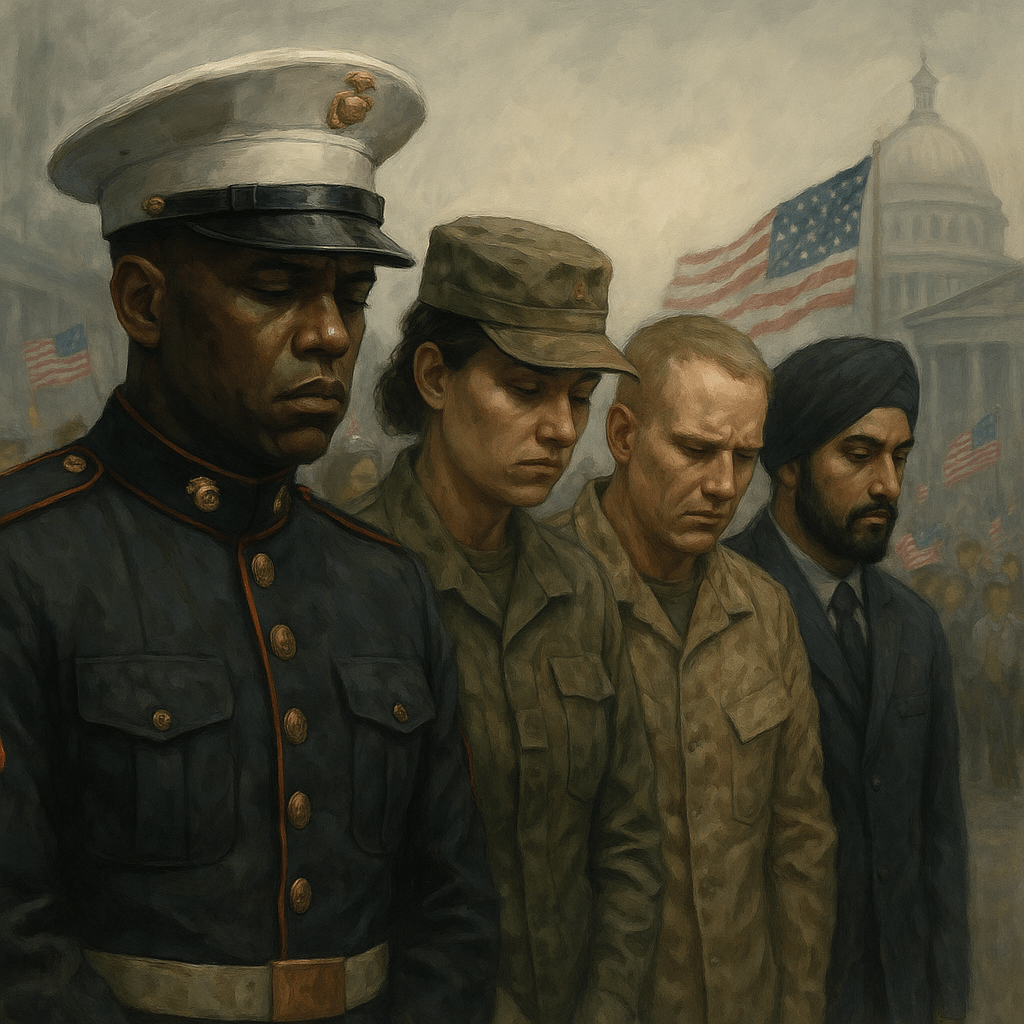
The same people this country routinely marginalizes, immigrants, Muslims, women, LGBTQ service members, Black, brown, and Asian Americans, wore the same uniform, took the same oath, and stood ready to give their lives. The U.S. military is, for better or worse, the most diverse institution in the nation. Every race, faith, orientation, and background stands side by side in uniform.
So ask yourself: when you say “thank you for your service,” who are you honoring?
Are you honoring the gay sailor who couldn’t be honest about who he loved?
The Muslim soldier who had to prove his loyalty twice?
The Black Marine who fought for a country that still debates his worth?
The immigrant who earned citizenship by putting their life on the line?
Or are you only honoring the version of the veteran that fits your politics and comfort zone?
If your gratitude excludes the diversity that makes up our armed forces, then it’s not gratitude, it’s performance.
The Hypocrisy of Judgment
And then there are people like retired Colonel Daniel Gade, who served honorably, paid a price, and rightfully received disability benefits, but now believe they can decide who “deserves” them.
It’s an arrogance that comes from viewing service through a narrow lens. Not everyone’s sacrifice looks the same. Not every wound bleeds. To suggest that some veterans are milking the system or should “get over it” is to forget that the system itself created the conditions that broke them.
When someone who’s benefited from the very programs meant to care for veterans turns around and questions others’ legitimacy, it’s not reform, it’s betrayal.
The Day After
Honoring veterans means more than clapping once a year. It means fighting for a VA that works, mental health support that’s accessible, and policies that don’t punish pain. It means remembering that service doesn’t end when the uniform comes off and that support shouldn’t either.
If your appreciation stops when the parade does, it was never about the veterans. It was about you.
Closing Thought
So, on this Veterans Day, before you post the hashtag or shake a hand, ask yourself the real question:
Who are you honoring?
Because you can’t claim to honor veterans if you only honor the ones who look like you, vote like you, pray like you, or fit the story you’re comfortable telling. Honor means seeing all who served, in all their diversity, struggle, and humanity. Anything less isn’t an honor. It’s hypocrisy wrapped in a flag.
And one more thing, save your “thank you for your service.”
That phrase has become a psychological pacifier for a nation that wants to feel patriotic without doing the hard work of caring. It’s been repeated so many times it’s lost any meaning, reduced to a reflex that keeps people from questioning the moral authority of those who send others to fight and die.
If you’re not advocating for better conditions for those still serving, for veterans trying to rebuild, for the families still paying the price, then your gratitude is empty.
Don’t thank me for my service. Fight for those who are still serving.
 GANA
GANA 
Leave a comment