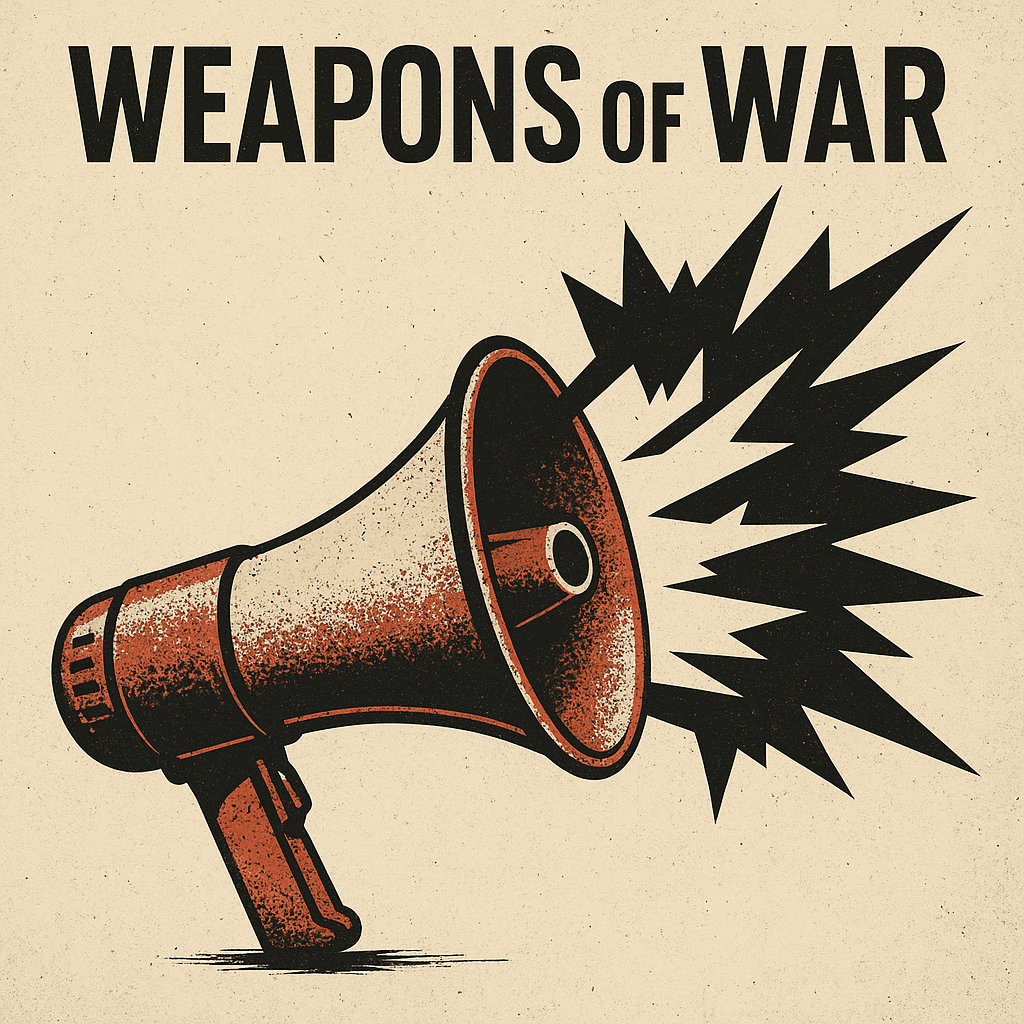
In today’s hyper-polarized world, language has become one of the most dangerous weapons of war. Words and labels that once had neutral meanings are now loaded with negative connotations, used deliberately to attack, silence, and marginalize others. This weaponization of language fractures society, shuts down honest dialogue, and protects entrenched power structures.
But before we point fingers outward, it’s crucial to look inward. Have you ever used these words without giving them a thought? Have you contributed to the culture of division by throwing around these labels? Awareness is the first step to change.
Why This List Exists
I didn’t create this list to mock anyone or encourage the use of these words. I put it together to raise awareness and shed light on language that has become so commonplace in our circles that we don’t even realize the harm it causes.
When we don’t see these words for what they truly are, weapons wielded unconsciously in everyday conversation, we can’t begin to change. The damage is real, even if it’s invisible until it’s pointed out.
This list serves as a starting point for a meaningful conversation we desperately need: why we continue to fight each other, why tribalism runs so deep, and how that division threatens our survival as a human race. If we want to rebuild empathy and unity, we must first recognize and dismantle the linguistic weapons we carry.
The hope is that by making this visible, we can choose to stop the cycle and start healing.
1. Intellectual and Ideological Labels
- Pseudoscience: Used to dismiss ideas or research that challenge mainstream science, often without engaging with the evidence, implying they are false or irrational.
- Conspiracy theorist: Labels individuals as irrational or paranoid for questioning official narratives, discouraging critical inquiry.
- Radical: Implies extremism or dangerous beliefs, stigmatizing advocates for significant social or political change.
- Extremist: Used to paint opponents as violent or fanatical, even when their views fall within everyday discourse.
- Fanatic: Suggests blind, irrational devotion, undermining the legitimacy of one’s convictions.
- Snowflake: Derides people as overly sensitive or fragile, particularly when they express dissent or demand respect.
- Cancel culture: Casts social accountability as oppressive censorship, minimizing concerns about harmful behavior.
- Woke: Originally meaning awareness of social injustices, it’s now often used sarcastically to mock progressive views.
- SJW (Social Justice Warrior): A pejorative for activists, implying performative or aggressive advocacy.
- Elitist: Accuses someone of being out of touch with ordinary people, often to discredit expertise or moral authority.
- Libtard / Rightard: Derogatory slurs combining “liberal” or “right” with “retard” to insult political opponents.
- Communist: Weaponized broadly to vilify leftist ideas as authoritarian or un-American.
- Fascist: Used loosely to brand political adversaries as oppressive or violent, diluting its historical meaning.
2. Social and Identity Labels
- Terrorist: Used to label political opponents or marginalized groups as violent threats, justifying repression.
- Illegal immigrant: Dehumanizes migrants by reducing them to criminal status rather than recognizing their humanity.
- Refugee: Sometimes disparaged to evoke fear or resentment against displaced people.
- Gangster / Thug: Racialized terms criminalizing marginalized individuals, often fueling stereotypes.
- Degenerate: Implies moral or social decay, often targeting minority cultures or behaviors.
- Deplorable: A political insult used to dismiss an entire group as morally reprehensible.
- Enemy of the people: A powerful phrase used to delegitimize dissenters or critics as threats to society.
- Infidel: A religiously charged label marking others as outsiders or enemies of faith.
3. Mental Health and Ability
- Crazy / Insane / Psycho: Slurs that stigmatize mental illness and dismiss valid emotional responses.
- Mentally ill: Often used to stereotype or marginalize individuals with mental health conditions.
- Addict: A label that can shame individuals struggling with substance use, ignoring complexity.
- Slow / Retarded: Offensive terms historically used to demean cognitive disabilities, now widely recognized as harmful.
4. Economic and Class Terms
- Welfare queen: A stereotype portraying welfare recipients as lazy or fraudulent, undermining social support systems.
- Lazy: A dismissive term blaming poverty or unemployment on personal failings rather than systemic factors.
- Elitist: Also used economically to accuse the wealthy or educated of being disconnected from “real” people.
- Capitalist: Sometimes wielded as an insult implying greed and exploitation.
- Socialist: Used pejoratively to suggest radical, unrealistic, or authoritarian economic policies.
5. Gender and Sexuality
- Feminazi: A derogatory term attacking feminists by equating them with extremists.
- Slut: A misogynistic insult policing women’s sexual behavior.
- Dyke: Originally a slur against lesbians, though sometimes reclaimed within the LGBTQ+ community.
- Queer: Has been weaponized to insult LGBTQ+ individuals, though also reclaimed positively.
- Pervert: Used to shame individuals for consensual sexual preferences or identities.
- Transgender: Frequently targeted with misinformation or negative stereotypes to delegitimize trans identities.
6. Cultural and Religious Terms
- Cult: Used to dismiss non-mainstream religions or movements as dangerous or irrational.
- Heathen: An exclusionary term labeling non-believers as immoral or inferior.
- Heretic: Historically, a term used to describe dissent from religious orthodoxy, now often employed to stigmatize ideological divergence.
- Infidel: Marks others as enemies of faith, often fueling religious conflict.
- Sharia law: Weaponized in political rhetoric to evoke fear of supposed oppressive religious rule.
Final Thoughts
Language holds immense power; it can either build bridges that connect us or walls that divide us. Thoughtful words foster understanding and community, while weaponized language isolates and wounds. Becoming aware of how we use language is the first step toward breaking harmful cycles and creating space for honest, respectful dialogue.
A Call to Reflect: Are We Using Words as Weapons?
If you recognize some of these words in your language, you may have used them freely or heard them often. I urge you to pause and truly reflect on their power. These terms are not harmless; they are demeaning, hurtful, and damaging.
We all worry about the hateful words children endure from their peers, the bullying, the insults that lead some young people to take drastic and tragic actions. We understand that words can inflict deep emotional wounds, shaping lives long after they’re spoken.
So why do we often fail to apply this awareness to our speech? If words can hurt a child, they can hurt any of us. We owe it to ourselves, our communities, and especially the next generation to examine our language honestly.
By recognizing when our words become weapons, we take the first step toward breaking cycles of harm and fostering a culture of empathy and respect.
Let’s choose a language that heals, empowers, and connects, rather than one that divides and destroys.


 GANA
GANA 
Leave a reply to Luis Alicea Cancel reply