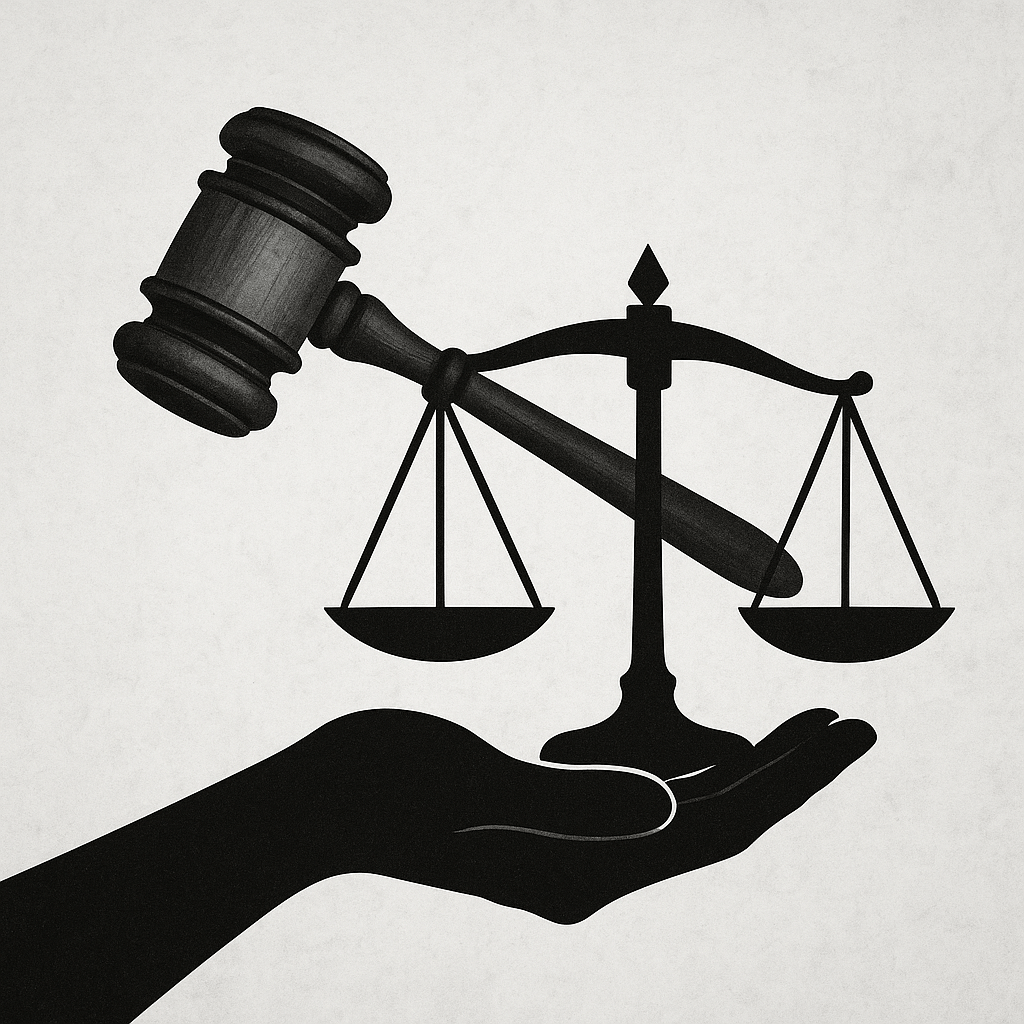
Law Isn’t the Same Thing as Morality
The easiest way people defend harsh immigration policies is with one sentence: They broke the law.
That’s it. No discussion of context, no discussion of humanity just the idea that once a law exists, following it is automatically moral.
History proves otherwise.
Law Protects Power, Not Justice
Laws don’t fall from the sky. Those in power write them to protect their interests. Sometimes they overlap with morality. Many times they don’t.
Slavery? Legal. Escaping it? A crime. Assisting an enslaved person? Also a crime. By the law’s standard, Harriet Tubman was a criminal. By any moral standard, she was a hero.
Segregation? Legal. Rosa Parks refused to move. Illegal. Sitting at the wrong lunch counter? Illegal. Morality demanded resistance.
Even the worst atrocities in history, like genocide in Nazi Germany, were justified through law. Resistance was “illegal,” yet moral necessity demanded it.
So when someone says “but it’s the law,” what they’re really saying is, “power has spoken.” That’s not morality.
Immigration and the Double Standard
Now shift to immigration. U.S. law criminalizes certain entries and overstays. Deportation is the prescribed penalty. But morality isn’t so clear.
Most migrants aren’t leaving their homes for adventure. They’re escaping poverty, climate collapse, or violence often worsened by U.S. foreign policy and corporate exploitation. They come to survive. Punishing survival isn’t moral, even if it’s legal.
And here’s the hypocrisy: wealthy corporations and elites break laws all the time. Tax evasion. Labor violations. Campaign finance games. The consequences? Usually, fines, loopholes, or a slap on the wrist.
Meanwhile, the powerless immigrants face the full brunt of enforcement: same country, same laws, two completely different outcomes.
A Modern Example: Roving Patrols
The danger of confusing law with morality showed up again in a recent Supreme Court decision. The Court allowed federal immigration agents to keep running “roving patrols” in California.
Here’s what that looks like in practice: heavily armed officers pulling aside people who look Latino, who speak Spanish, or who happen to be in low-wage job sites. Some of those stopped were U.S. citizens.
Lower courts had said these stops likely violated the Fourth Amendment. The Supreme Court brushed that aside. One concurrence even suggested ethnicity could be a “relevant factor” when deciding who to stop.
Justice Sonia Sotomayor’s dissent hit the core issue: we shouldn’t live in a country where the government can seize people simply because of how they look or sound.
That’s the gap. Legality on one side. Morality on the other.
The Pattern Is Always the Same
Every time in history, defenders of injustice have hidden behind the same shield: It’s the law.
Slave catchers said it. Segregationists said it. Colonizers said it. Now immigration hardliners say it. The words change, the faces change, but the logic is identical.
Law alone can’t be our standard. Because if it were, the ugliest chapters of history would all be justified.
The Real Test
The real question isn’t whether immigrants have broken the law. The real question is whether the law itself deserves to be obeyed.
Is it humane? Is it just? Does it treat people with dignity?
If the answer is no, then “enforcing the law” isn’t a virtue. It’s complicity. And no administration, past, present, or future, can hide behind legality and call it justice.
 GANA
GANA 
Leave a comment