Introduction
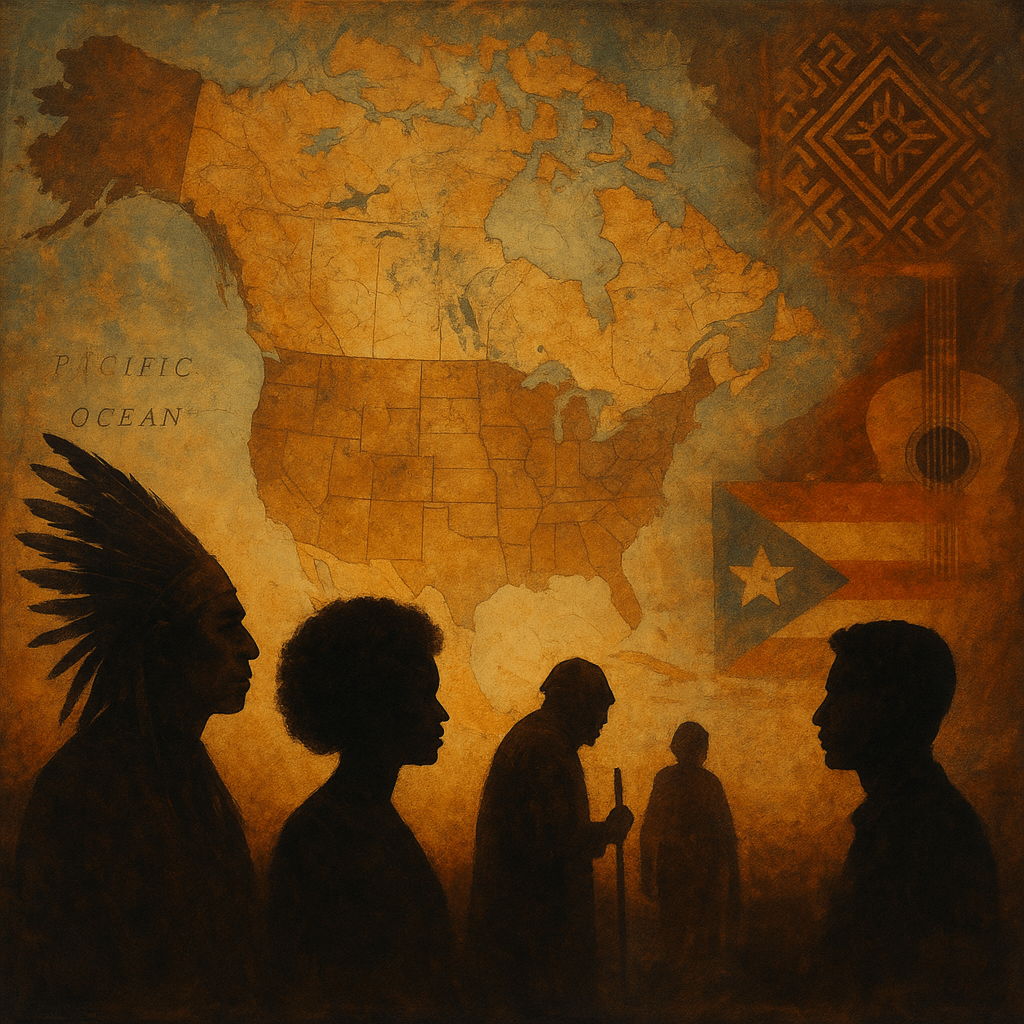
Rhetoric today often revolves around a deep fear that “traditional” culture and identity are under threat by immigration, multiculturalism, and demographic change. Those who claim to defend this threatened way of life present themselves as victims facing extinction. Yet, when we examine the lived histories of Indigenous peoples across the Americas, African-descended communities, and Mexican Americans, a very different and painful story emerges. The culture some seek to protect was built on violent erasure, displacement, and oppression of these groups. Their fears ignore centuries of brutal history and ongoing struggles. This selective forgetting lies at the core of their worldview and fuels fierce resistance to honest education, such as Critical Race Theory (CRT), which exposes suppressed truths.
The Systematic Erasure of Cultures Under Colonial Rule
Alaska Native peoples endured forced assimilation policies designed to sever connections to their languages, traditions, and lands. Boarding schools punished children for speaking their languages or practicing ceremonies, aiming to replace Indigenous identity with Euro-American norms. Military and industrial expansions uprooted entire communities, devastating subsistence economies and spiritual ties to the land. These displacements were authorized by federal policies, leaving lasting trauma.
Native Hawaiians suffered similarly after the 1893 overthrow of the Hawaiian Kingdom, a coup backed by American businessmen and the U.S. military. Hawaiian sovereignty ended, marking decades of cultural suppression. The language was banned in schools, native religious practices discouraged, and sacred lands confiscated. Though local officials enforced these policies, they operated within a U.S. colonial system designed to erase Hawaiian identity. Still, Native Hawaiians have resisted through language revitalization, cultural resurgence, and political activism.
Puerto Rico’s Indigenous Taíno population was nearly wiped out during Spanish colonization, yet their descendants persist despite marginalization. Under U.S. colonial rule, repression continued, including laws criminalizing the Puerto Rican flag until 1952. The 1937 Ponce Massacre, when Puerto Rican police opened fire on peaceful nationalists, killing 19 and injuring hundreds, occurred under U.S. colonial authority, illustrating the violent suppression of self-determination. Economic exploitation and political disenfranchisement further marginalized Puerto Rican identity, but resistance endures.
African-descended peoples suffered one of history’s most brutal cultural erasures. Millions were forcibly brought through the transatlantic slave trade, stripped of languages, religions, and family connections. Enslaved Africans were forced into Christianity and forbidden from practicing their ancestral religions. Sales, as well as the fragmentation of kinship networks, tore families apart. Despite this, African cultural traditions survived and adapted, inspiring syncretic religions like Santería and musical forms such as bomba and plena in Puerto Rico, which serve as symbols of resilience in the face of oppression.
Mexican communities in the American Southwest faced cultural marginalization after the U.S.-Mexico War. Overnight, millions became minorities in a country that sought to suppress their language, customs, and political power. Landowners lost property through fraudulent claims and violence. English-only schooling and discriminatory laws aimed to erase Mexican culture. Local authorities enforced these measures within a broader U.S. framework designed to suppress Mexican American identity. Despite challenges, Mexican communities have maintained rich cultural traditions and organized politically to resist discrimination.
Forced Displacement and the Myth of Replacement
The fear of “replacement” ignores the violent realities behind demographic shifts. Indigenous peoples across the Americas have faced centuries of forced removal from their ancestral lands. Alaska Native communities were pushed aside to make way for military bases, oil extraction, and industrial development, uprooting sacred relationships and disrupting social structures.
The overthrow of the Hawaiian Kingdom marked the end of centuries of Indigenous governance. Annexation by the U.S. led to political and cultural confinement, with lands confiscated and redistributed to outsiders. Puerto Rico remains a colony with restricted self-governance and imposed economic dependency. Indigenous and Afro-Puerto Rican identities are suppressed within this colonial relationship.
Millions of Africans were violently uprooted and enslaved to build settler economies; they were never “replacing” anyone, but were forcibly inserted. Mexican landowners lost vast estates through broken treaties, legal manipulation, and violence after U.S. territorial expansion. Anglo settlers seized political control, reshaping the cultural landscape.
These demographic changes are not conspiracies but documented histories of systemic oppression. Understanding this is essential to challenging false narratives that fuel cultural fear today.
Who Controls the Narrative? The Power of Selective Memory
At the core of cultural grievance is the belief that “their” history and culture are vanishing. Yet the histories of Indigenous peoples, African-descended communities, Puerto Ricans, Mexican Americans, and Native Americans have been excluded or distorted in education and public discourse. Textbooks minimized genocide, slavery, and colonization; Indigenous and Mexican contributions were marginalized or stereotyped; African histories were erased or caricatured.
Public narratives glorify colonizers while silencing resistance and survival. It took decades of activism and scholarship for marginalized communities to reclaim their stories. This selective amnesia underpins sanitized national myths, which Critical Race Theory challenges by exposing systemic racism and colonial violence, the foundation of the dominant culture some seek to defend.
Forced Assimilation, Ongoing Repression, and Resilience
Cultural change is feared, yet Indigenous, Afro-descended, Puerto Rican, Mexican American, and Native American communities have long faced forced assimilation and repression. Native children were punished for speaking their languages; Puerto Ricans were criminalized for flying their flag or speaking Spanish; African-descended peoples face systemic racism rooted in slavery and segregation; Mexican Americans confront discrimination and cultural erasure.
Beyond history, these communities face persistent narratives that question their belonging in the countries their ancestors built. These exclusionary narratives fuel systemic barriers and cultural invisibility. Yet, vibrant cultural revitalization, political activism, and community organizing demonstrate fierce resilience and a refusal to be erased.
Land Theft and Continuing Struggles for Sovereignty
Claims to defend “homeland” ring hollow when Indigenous nations endured forced removal from ancestral lands via policies like the Indian Removal Act, the Trail of Tears, and broken treaties. Alaska Native lands were confiscated or leased without consent for military and industrial projects. Native Hawaiians lost their sovereignty and lands after the 1893 overthrow, which was backed by U.S. forces. Puerto Rico remains politically and economically colonized. African-descended peoples were uprooted from their homelands and enslaved, denied land or political power. Mexican communities lost ancestral lands through conquest, legal manipulation, and violence after U.S. expansion.
These ongoing struggles for land rights, sovereignty, and justice continue through legal battles, cultural resurgence, and political advocacy, direct continuations of historical violence.
The Hypocrisy That Makes Me Sick
I don’t understand how people can tell others to “go back where you came from” while flocking to the cultures they demonize. They suppress entire communities yet enjoy their food, music, festivals, and landscapes. It’s a slap in the face, betrayal wrapped in convenience.
Puerto Rico is slowly stripped of its people. Corporations use it as a tax haven, cashing in while Puerto Ricans are displaced. It’s becoming the next Hawaii: a tourist paradise where locals struggle to make a living.
Hawaii sees tourists flooding in while Native Hawaiians live in poverty, their culture commodified and sovereignty crushed. Alaska Native communities are repeatedly uprooted for profit. Native Americans are pushed aside when resources are found. Africa, rich beyond measure, was plundered and left to fend for itself, while some call it a “shithole continent.”
This blatant hypocrisy and willful blindness make me sick. These communities are treated like props or profit sources, denied respect and a sense of belonging. People cry about “losing culture,” yet they built their identities on erasing others. I refuse to stay silent.
Food for Thought
So, the next time someone celebrates America’s “discovery” of land, culture, or resources, remember who was erased, displaced, and exploited. True history isn’t conquest or theft; it’s about honoring resilience, resistance, and humanity.
 GANA
GANA 
Leave a comment