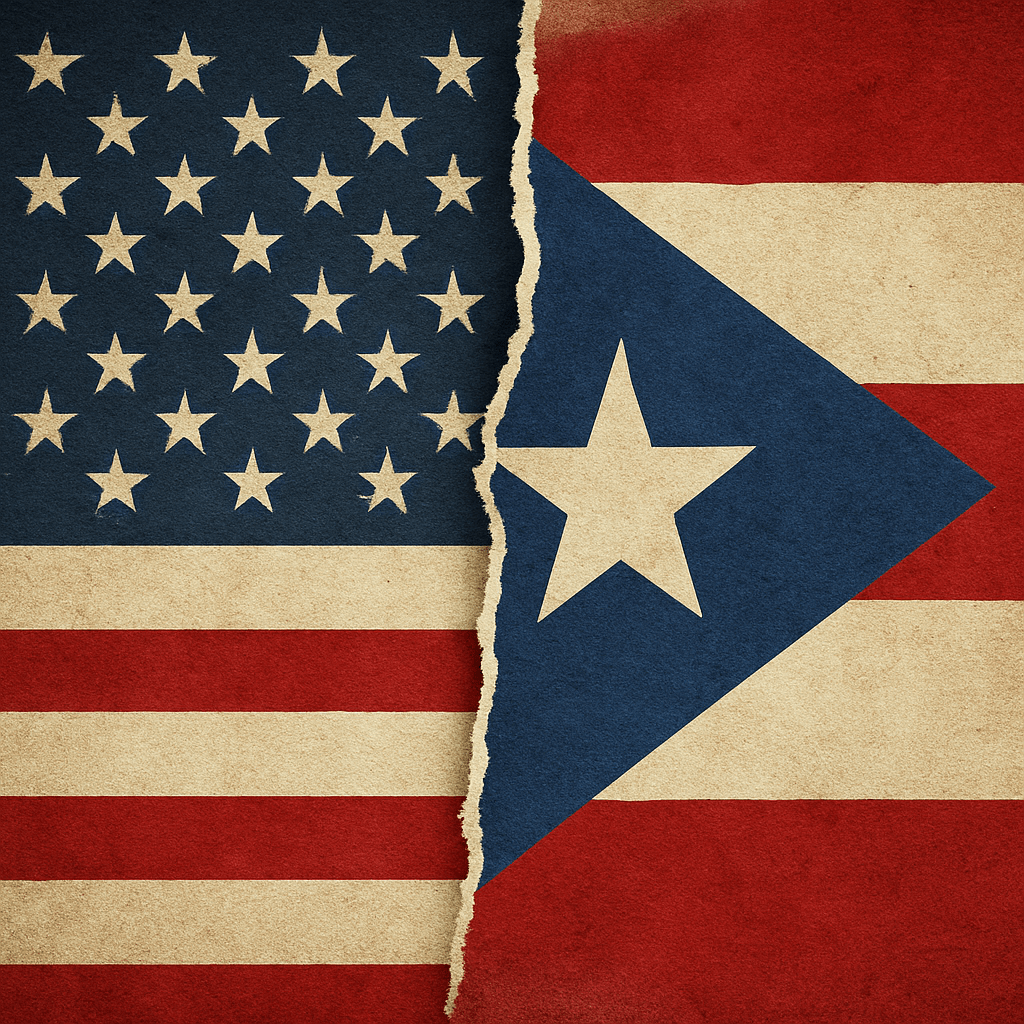
Last weekend, New York City burst into life with the annual Puerto Rican Day Parade along Fifth Avenue. Colorful floats rolled past cheering crowds, live music pulsed in the air, and neighborhoods hosted cookouts and block parties. It was a powerful celebration of heritage and identity; a testament to Puerto Rican pride and resilience.
But imagine this: you wake up after those celebrations to find an executive order has reclassified you and millions of fellow U.S. citizens as non-citizens, stripping away passports, benefits, and legal protections; and all without a single vote in Congress.
This is not science fiction. It is a hypothetical playbook based on real precedents from the current administration, showing how emergency powers, fund diversions, military threats, and data from a real GAO report could be combined to target Puerto Rico and those born on U.S. soil to parents without permanent status.
1. Day One: The “Puerto Rico Transition Act” Executive Order
The first move: Declare a fiscal and governance emergency in Puerto Rico under the National Emergencies Act.
What Happens:
- Puerto Rico is reclassified as a foreign territory.
- DHS and State must treat anyone born on the island after the EO’s effective date as non-citizen nationals.
Why It Matters: This mirrors the emergency declaration used to build the border wall. It bypasses Congress’s power of the purse and sets the stage for further unilateral actions.
Transition: Having declared an emergency, the administration moves to redefine who qualifies as a citizen.
2. Simultaneous 14th Amendment Override: EO 14210
Next step: Issue an executive order asserting that the 14th Amendment’s Citizenship Clause never guaranteed birthright citizenship for children of non-citizen parents or Puerto Ricans.
What Happens:
- Newborns in all 50 states with undocumented or temporary-status parents lose automatic citizenship.
- Puerto Ricans born on and off the island are told their citizenship derives solely from a 1917 statute, not the Constitution.
Why It Matters: Even constitutional rights can be tested when the executive claims sole authority over interpretation. This echoes the current administration’s January 20, 2025, attempt to rescind birthright citizenship.
Transition: With citizenship under threat, the administration needs mechanisms to enforce these new classifications.
3. Diverting Funds to Transition Centers
The enforcement mechanism: Invoke 10 U.S.C. § 2808 to reroute five billion dollars in military construction funds.
What Happens:
- Funds are used to build Transition Registration Centers on Vieques and Culebra.
- Residents are summoned to camps for a citizenship review, where armed personnel reclassify their status.
Why It Matters: This tactic replicates the tactic of diverting funds used for the border wall. What began as an emergency exception becomes a routine policy tool.
Transition: As the world watches these camps, the administration signals it will use force if necessary.
4. Militarizing the Response
Escalation: Announce that any local resistance will trigger the federalization of the National Guard and the deployment of active-duty troops.
What Happens:
- Puerto Rican leaders and state governors face the threat of U.S. forces on their streets if they protest.
Why It Matters: This echoes contingency plans for Greenland and California. Military threats amplify the pressure to comply.
Transition: Even courts may not offer timely relief, thanks to the next tactic.
5. Bypassing Courts with the Shadow Docket
Legal maneuver: File emergency applications to the Supreme Court seeking stays of district-court injunctions.
What Happens:
- Injunctions are paused, leaving the policies in effect while lower courts catch up.
Why It Matters: The Shadow Docket has become a favored backdoor for executive actions that evade normal judicial review.
Transition: With legal and physical pressure in place, the administration lays out its final bargaining chip.
6. Political Leverage: Restore Citizenship with Conditions
The offer: Citizenship can be restored only if Puerto Rico agrees to three demands:
- Lease Vieques as a permanent U.S. naval base;
- Grant San Juan’s ports exclusively to U.S. shipping companies;
- Establish an Agribusiness Freedom Zone with zero tariffs on American imports.
Why It Matters: This weaponizes citizens’ rights as bargaining chips, undermining true sovereignty and exposing the peril of unchecked executive power.
Transition: The narrative so far is one of coercion; now consider the fiscal backdrop used to justify it.
7. Real-World Rationale: GAO-14-31’s Fiscal Projections
Before declaring emergency orders, the administration cites the publicly available GAO report GAO-14-31 (June 2014) to frame statehood as a fiscal crisis Congress failed to address.
Key Projections:
- Medicare: From $4.5 billion (2010 actual) to $4.5–$6.0 billion under state treatment.
- Medicaid: From $685 million (2011 actual) to $1.1–$2.1 billion under full state eligibility.
- SNAP: From $1.9 billion (2011 block grant) to $1.7–$2.6 billion under state rates.
- SSI: From $24 million (2011 actual) to $1.5–$1.8 billion if full benefits applied.
- Revenues: Individual income taxes jump from $20 million (2010) to $2.2–$2.3 billion. Corporate taxes from $1.4 billion to $5.0–$9.3 billion, noting potential relocations might temper gains.
Why It Matters: By grounding the emergency narrative in real data, the administration portrays the removal of constitutional and statutory rights as necessary to avoid a budgetary collapse, sidestepping democratic debate.
Transition: With the fiscal case made, readers can see how each coercive step builds toward a crisis of rights and representation.
Conclusion and Call to Action
This hypothetical sequence draws on actual policies, emergency declarations, fund diversions, military threats, legal bypasses, and a real GAO report to illustrate how both statutory and constitutional citizenship can be jeopardized by unchecked executive power.
Recap of Steps:
- Declare an emergency and reclassify Puerto Rico.
- Override the 14th Amendment.
- Divert funds to enforcement camps.
- Threaten military action.
- Evade judicial review via the Shadow Docket.
- Use citizenship restoration as leverage.
- Cite GAO fiscal projections to justify each move.
Next Steps: Resolving Puerto Rico’s status through full statehood, independence with binding treaties, or a constitutional amendment is essential to safeguard millions of citizens from future abuses. Only a definitive solution can prevent the erosion of rights by unilateral executive action.
 GANA
GANA 
Leave a comment