How America Decides Who Gets to Dream
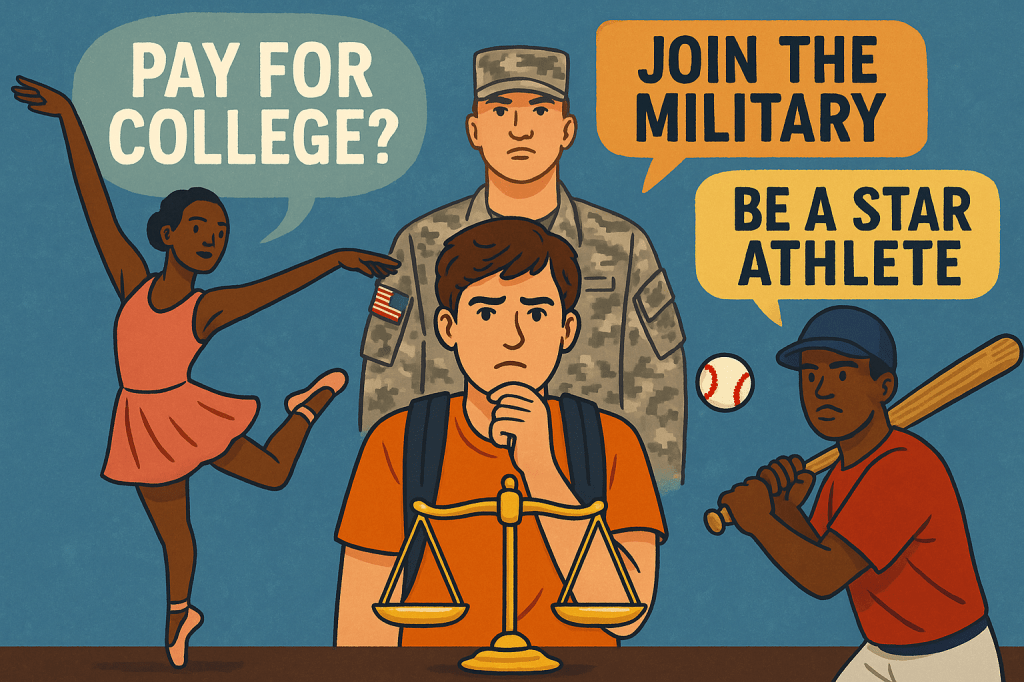
When I talk about the pressures on our kids today, I want to be clear. I am not here to slam the military. That is just one piece of a much bigger system. The military helped me, and I know it helps many others. But it is also part of a society that expects young people to give something big to get something, like free college, a decent job, or a stable future.
Our society is built around this capitalist pay-to-play mentality. If you do not produce, if you do not perform, you do not get. You want help paying for college? Great, but you better join the military or be a star athlete. You better dance, run, hit home runs, or swim faster than everyone else. Otherwise, tough luck.
The Performance Economy in College Athletics
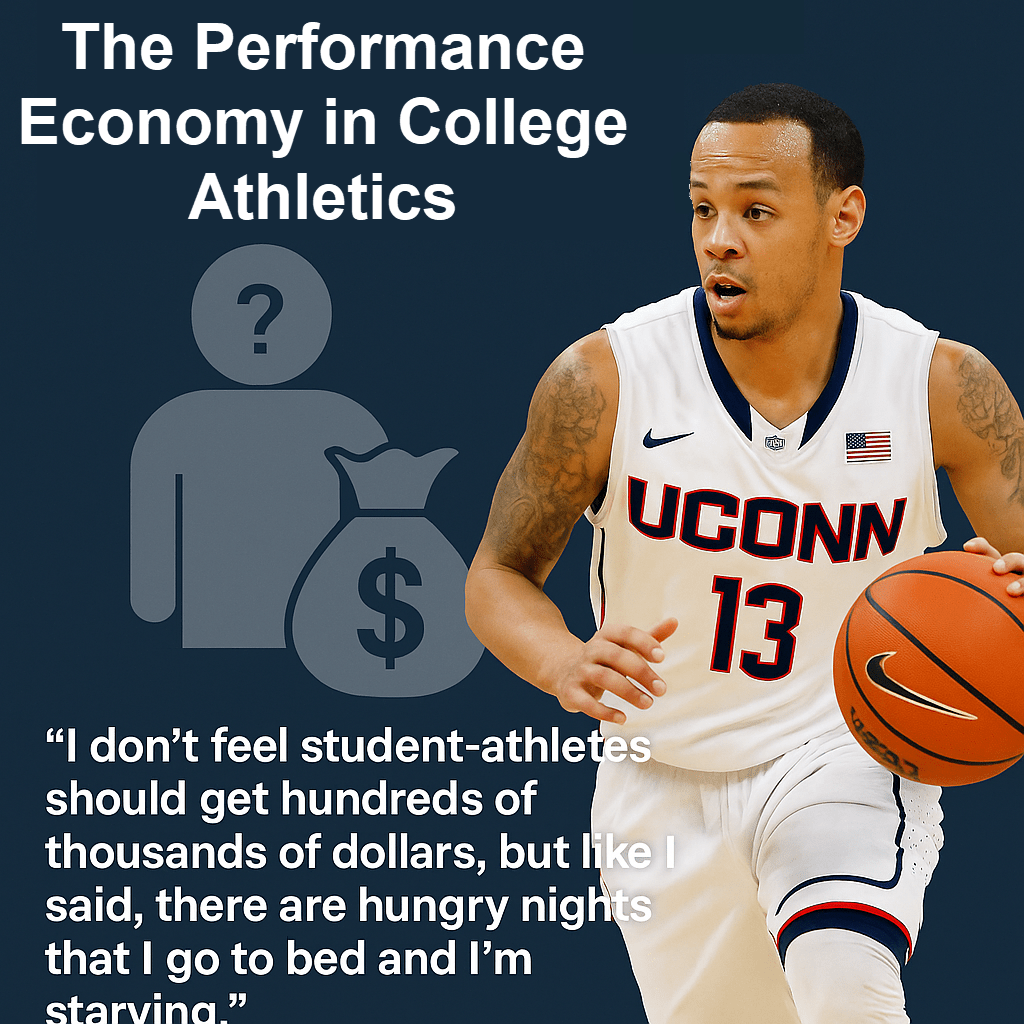
Take college sports, for example. The athletes who bring in millions for their schools often do not see a dime beyond a scholarship. It took a huge fight just to allow college athletes to be paid for endorsements because schools and leagues profit off their talent while the athletes sometimes struggle just to buy food.
One stark example comes from Shabazz Napier, the University of Connecticut basketball star who led his team to the 2014 NCAA championship. Despite his success, Napier revealed he sometimes went to bed “starving” because his scholarship did not cover all living expenses. He said,
“I don’t feel student-athletes should get hundreds of thousands of dollars, but like I said, there are hungry nights that I go to bed and I’m starving.”
This contradiction highlights a flawed system where athletes perform at the highest level and generate massive revenue, yet face real financial hardship. Schools rake in millions from jersey sales and broadcasting rights, but many players struggle to afford basic needs.
This is not unique to UConn. Reports by NPR, The Atlantic, CBS Sports, and ESPN confirm food insecurity and financial struggles among college athletes nationwide.
The recent NCAA settlement is a response to these long-standing problems. It is progress, but the underlying pay-to-play system remains.
A Turning Point: NCAA Agrees to Pay Student-Athletes
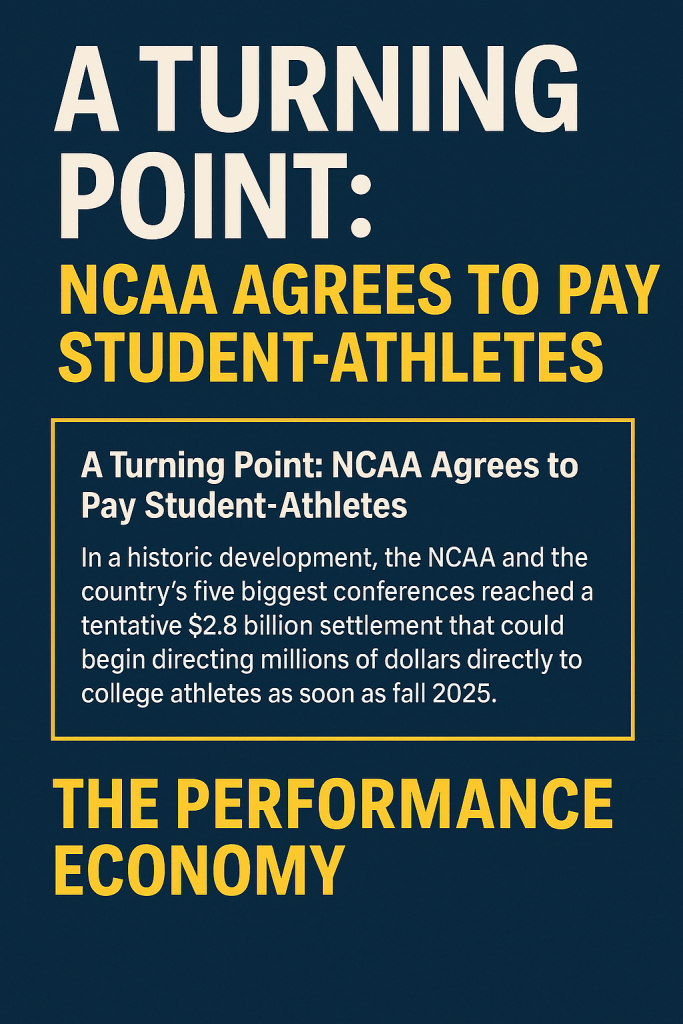
In a historic development, the NCAA and the country’s five biggest conferences reached a tentative $2.8 billion settlement that could begin directing millions of dollars directly to college athletes as soon as fall 2025. This settlement challenges the century-old NCAA amateurism model, allowing schools to share significant revenue with players beyond scholarships and endorsement money.
Under the agreement, schools could allocate up to $21 million per year to athlete compensation, marking a major step toward fairer treatment. While many details remain to be worked out, including compliance with Title IX and the role of booster groups, this settlement signals progress in recognizing athletes’ rights.
But it also underscores the ongoing reality of the pay-to-play system. Athletes generate immense value but have long been denied fair compensation. This reveals deep systemic issues in college sports and beyond.
Education Isn’t Free — But It Should Be
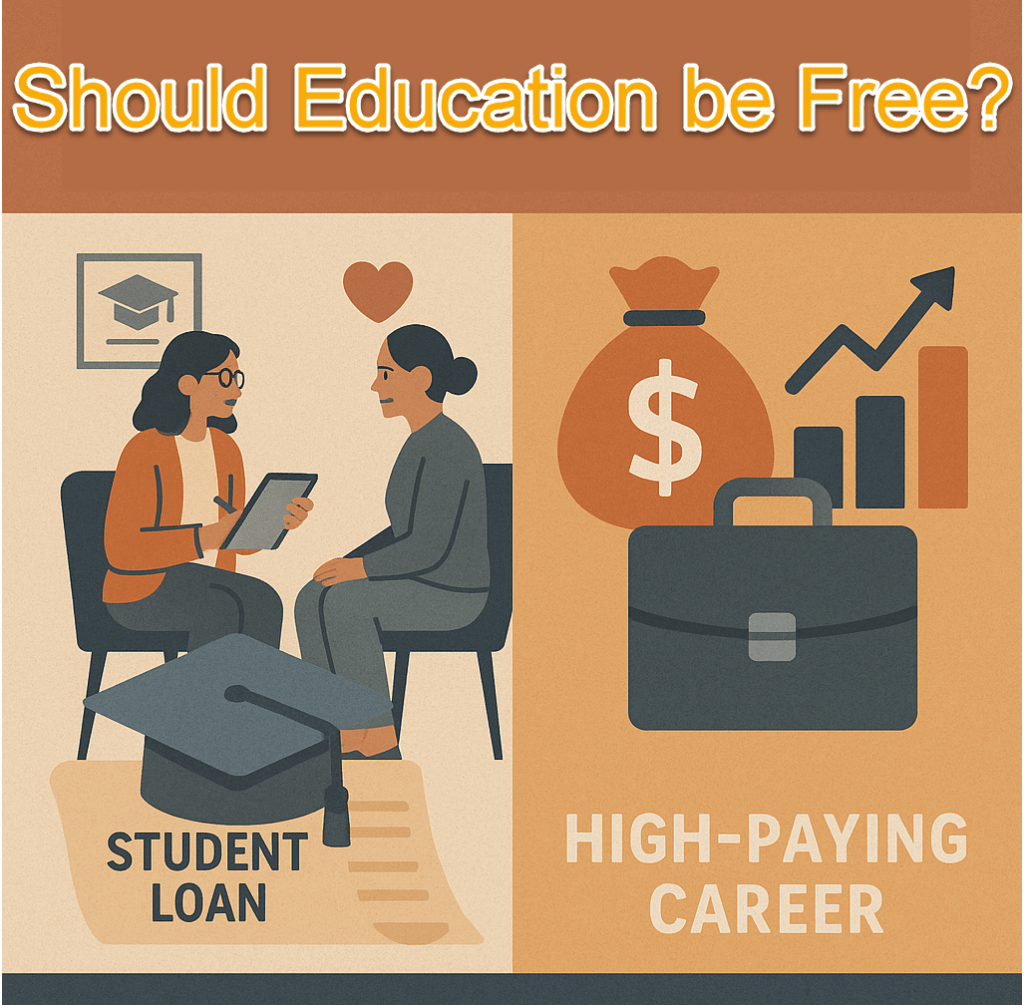
Now consider careers like social work, nursing, and public service. My wife is a social worker who invested time, money, and energy into her education, not for fame or fortune but because her work matters. Yet the financial payoff is modest at best. The cost of education has not dropped just because these fields are not lucrative.
Young people face a hard choice. They can take on crushing debt for a public service career or chase paths where money and status are prioritized, even if those paths come with risks and limitations.
Monetizing Childhood: The Crushing Pressure of Youth Sports
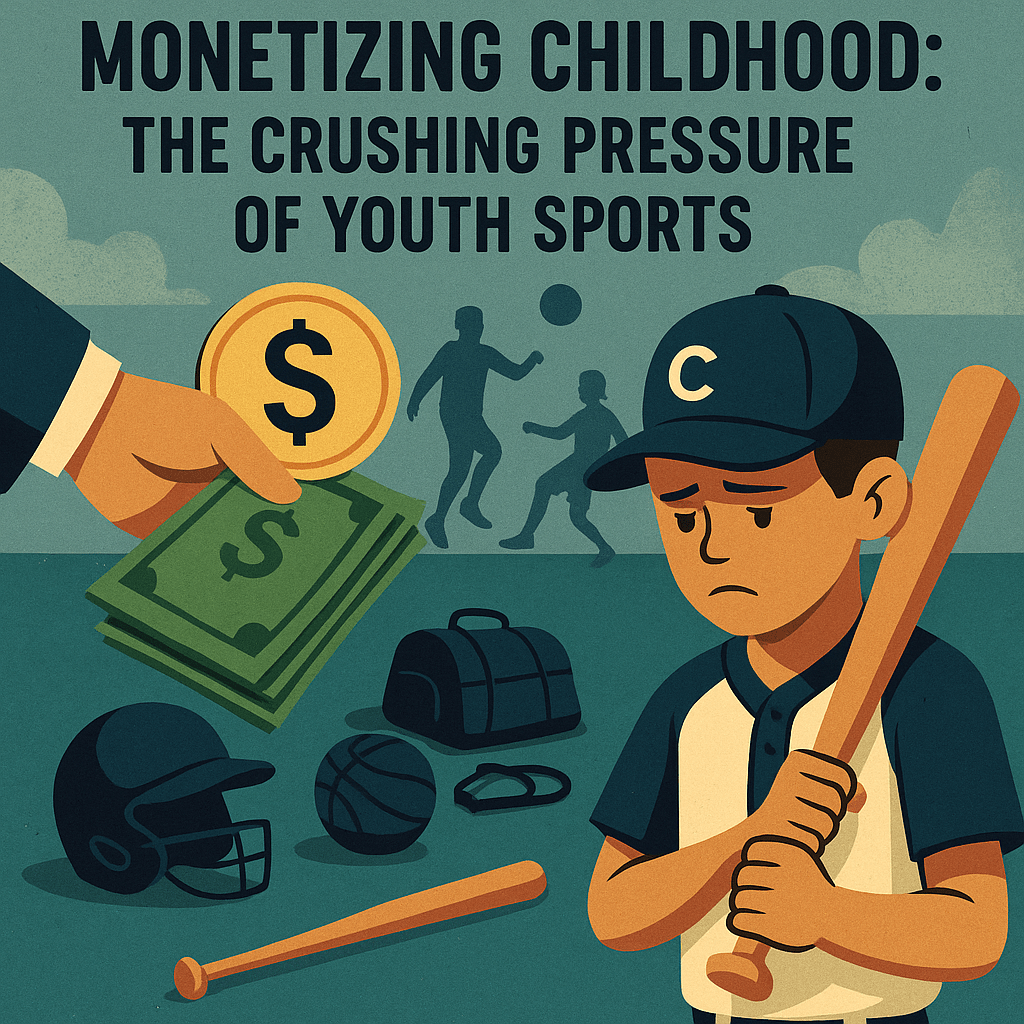
Sports offer another example of the pay-to-play reality. When I was a kid, baseball and basketball were about fun and community. We played pickup games without worrying about scouts or contracts.
Today, youth sports are heavily commercialized. Families pay thousands in fees, equipment, and travel just for their kids to compete. Kids feel pressure to perform early, chasing scholarships or elite status. The joy of simply playing is often lost.
Professional athletes are also caught in this system. Their bodies become assets to team owners and corporations, expected to perform and generate profits above all else.
When play becomes performance, the pressures start earlier, and the consequences last longer.
Kids Aren’t Valued for Who They Are, Only for What They Can Do
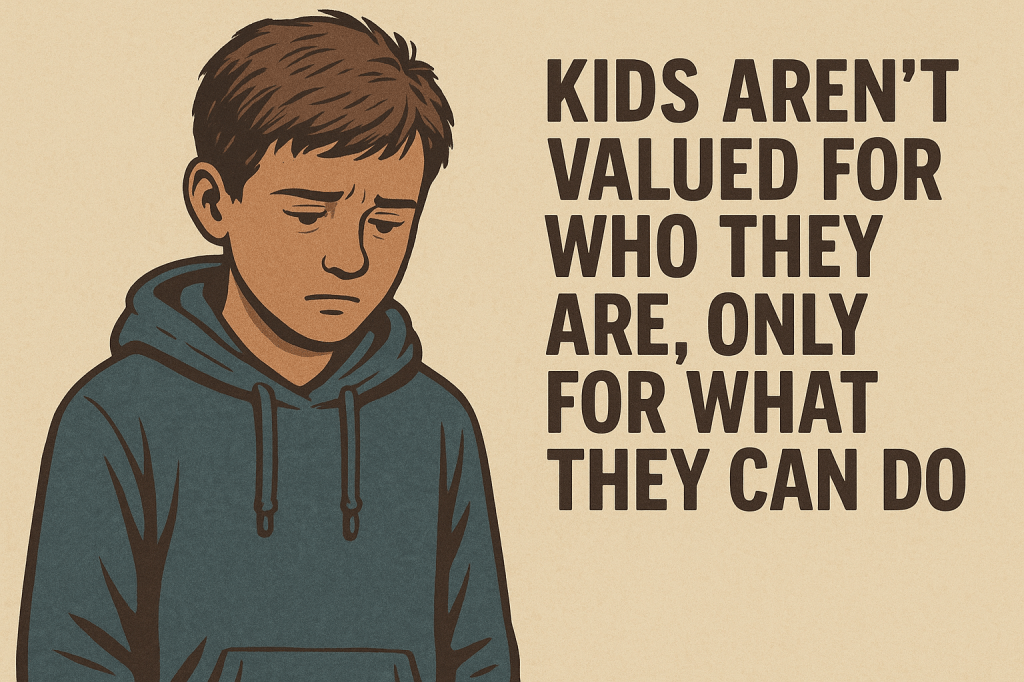
The message to young people is clear. Your value depends on how much you produce or perform. If you do not have a scholarship, or cannot join the military, or do not have the “right” skills or connections, you are at a disadvantage.
This system is not just unfair. It is destructive. It kills the idea that everyone deserves support simply because they are human, not because they are profitable.
The Financial Burden on Families Starts Early and It Is Crushing
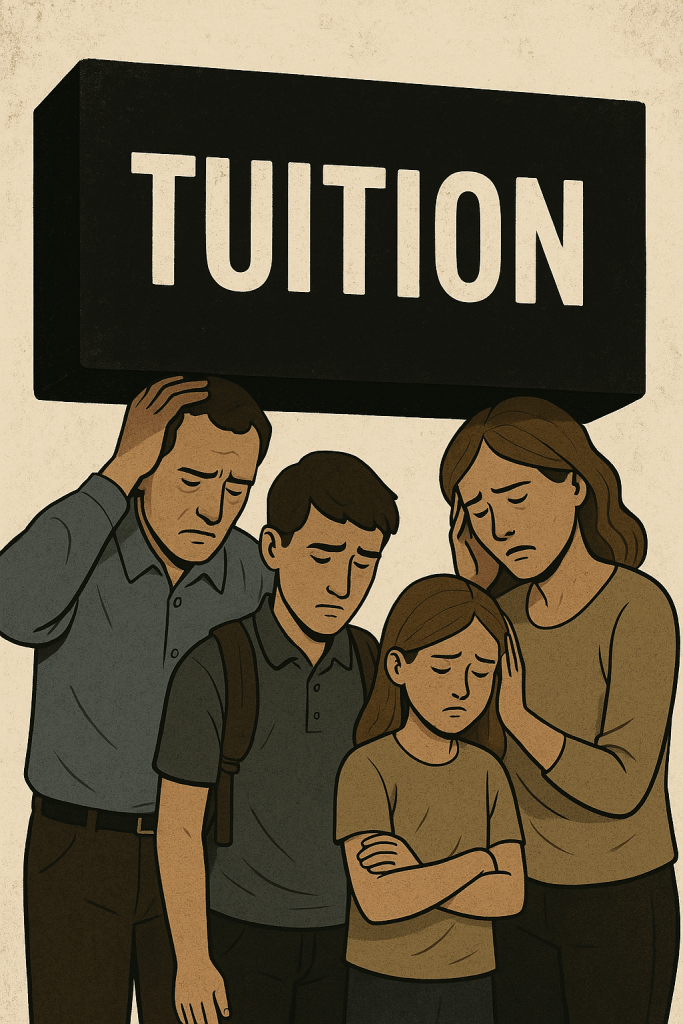
The financial burden of education does not fall only on students. Families carry it too. Even families who have the means to pay for college still feel the pressure and sacrifices involved. The cost of tuition and related expenses weighs on the entire family, not just the student pursuing the degree.
I know of private high schools, not charter schools but traditional private high schools, that charge tuition almost as high as a four-year college degree. This means that even before a child reaches college, families are facing massive education expenses.
This tuition monster is creeping into the high school arena, creating a two-tier system where families who can pay get better access and those who cannot are left behind or forced into other compromises.
Even if money were not an issue, I think this system is wrong. Education should be a right, not a privilege you buy. When families are pressured at every level, K through 12 and beyond, it shows how deeply the pay-to-play mentality has embedded itself in our society.
A Proud Moment and a Hard Truth: Personal Reflections on Opportunity and Choice
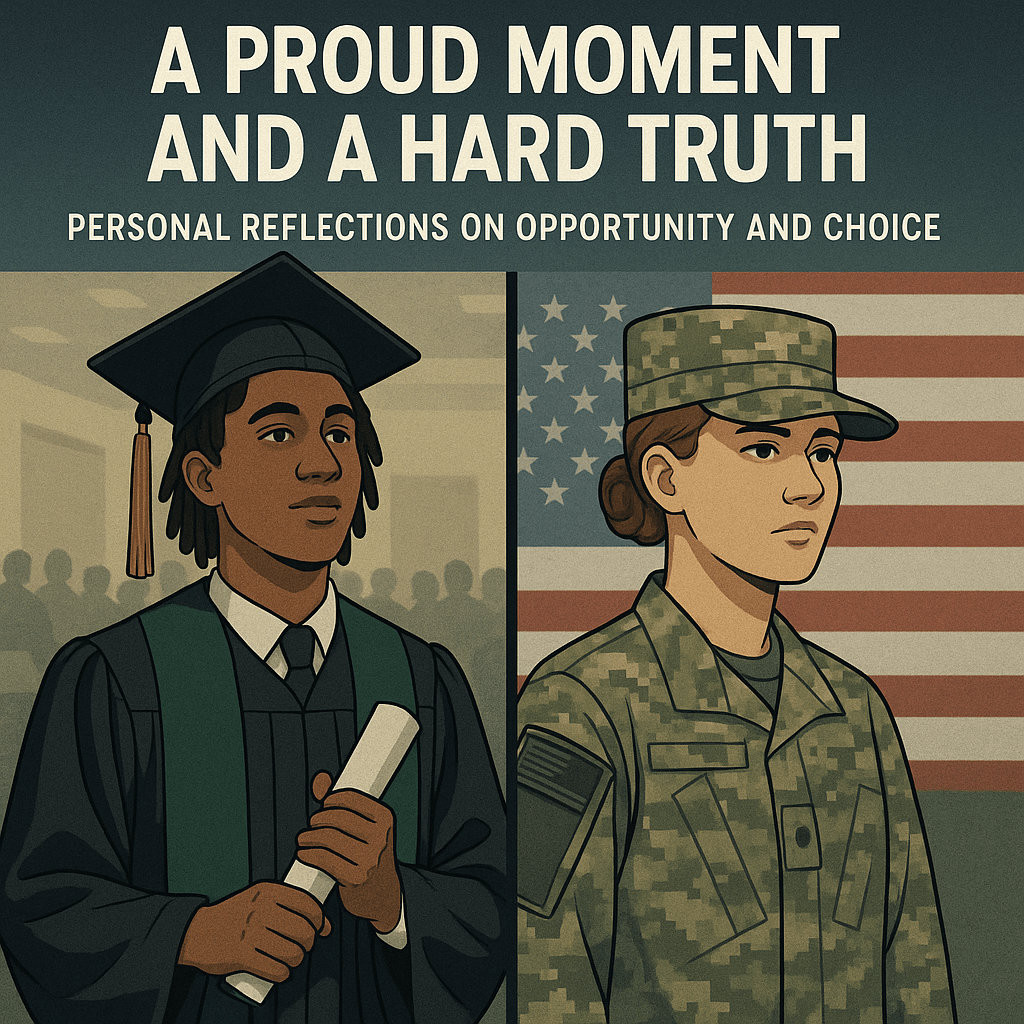
Yesterday I sat through a small ceremony where my son received his high school diploma. It was not the usual four years. He finished in what they call the fifth year of high school. He stayed tied to his high school while earning college credits. This was not just about getting tuition covered. It was about real discipline and follow-through.
He did not get tuition paid just for showing up. He earned it by taking on college-level work while finishing high school, completing nine college credits before he officially graduated. That is what academic readiness looks like. Commitment and effort. It was not a test of athletic ability or a requirement to sign up for the military. He did not have to “dance” or “run” or sign away his life. He had to show he was serious about education, and he did.
I felt proud, truly proud. But as I watched, I also thought about my stepdaughter. She is intelligent and driven, but she did not have the same options. We did not have the means or the time to set up a college fund for her. By the time she was ready, the financial path was not there.
I asked her if she had considered the military. I suggested the reserves or National Guard, a way to stay close to home and still earn education benefits. She did not want that. She made her own choice. She chose full-time active duty with a five-year commitment. That was not my preference, but it was her decision and I respect that.
She is building a medical career through the military. That path deserves respect. Still, it is the ultimate pay-to-play arrangement. You sign away years of your life for a shot at opportunity. Whether or not she ever sees combat, she has surrendered control in a way most people never have to. That is the price for a shot at a degree. It is a choice many young people make because better options do not exist.
A Broader Pattern
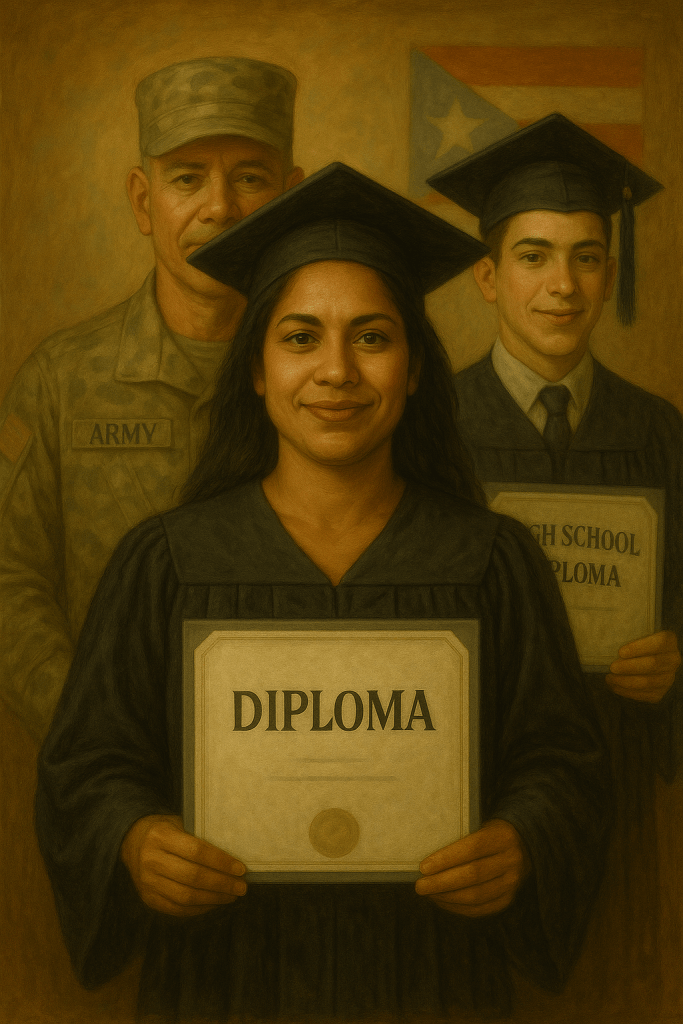
My oldest daughter completed college as an older student. She paid out of pocket, working and chipping away at her degree over a much longer period. I believe this is how many students eventually reach that goal. The finish line is not about a four-year dream. It is about persistence, sacrifice, and survival.
The truth is this pattern is familiar to me too. When I was young, college was not an option. I joined the military because that was the only real path available. Later, as my life changed, I realized how valuable and satisfying getting a college degree could be. So I went back. I became an older student myself, first earning my bachelor’s and then my master’s degree, long after most people my age had finished school. That experience was not just about achievement but about redemption. It was proof that you can build a different future, even if you have to take the long road to get there.
All these stories—my son’s fifth-year program, my stepdaughter’s military path, my oldest working through college as an adult, and my own late return to school—reveal the reality of education in this country. The price tags. The hoops. The choices that are not really choices for most families. When money closes doors, commitment and sacrifice take their place. But let’s be honest. That is not how opportunity should work. Education should be a right, not something you buy or a prize you risk your life for. Until we change that, every graduation is both a celebration and a hard truth about what it really takes to make it.
Real Investments in Our Kids: The ASCENT and TREP Programs
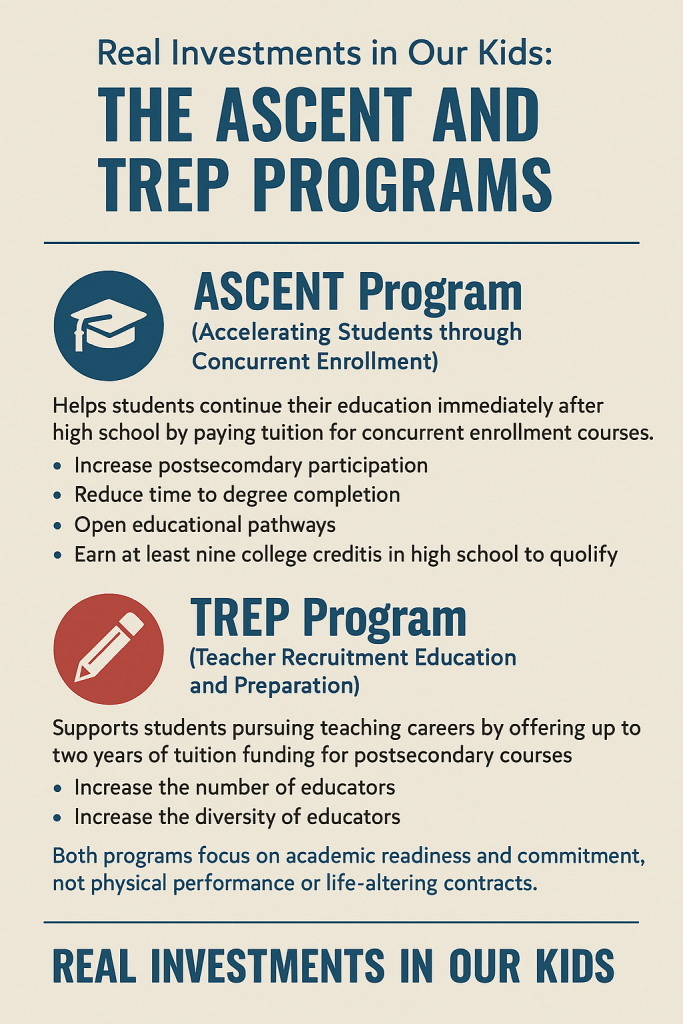
Colorado’s ASCENT Program (Accelerating Students through Concurrent Enrollment) and TREP Program (Teacher Recruitment Education and Preparation) are shining examples of how society could support young people differently.
The ASCENT Program helps students continue their education immediately after high school by paying tuition for concurrent enrollment courses. It focuses on increasing postsecondary participation, especially among low-income and underserved students, reducing time to degree completion, and opening educational pathways. To qualify, students must demonstrate commitment by earning at least nine college credits while in high school.
The TREP Program supports students pursuing teaching careers, offering up to two years of tuition funding for postsecondary courses. It aims to increase the number and diversity of educators, recognizing the vital importance of public service.
Both programs focus on academic readiness and commitment, not physical performance or life-altering contracts. They show what is possible when society invests in potential and purpose.
If programs like these exist in Colorado, why can they not be implemented nationwide? Instead of cutting social programs and giving massive tax breaks to the wealthy, we should invest in our youth, make education accessible, and support careers that build and sustain our communities.
But even these promising programs cannot erase the divide overnight. The larger problem remains.
The Reality of Unequal Access
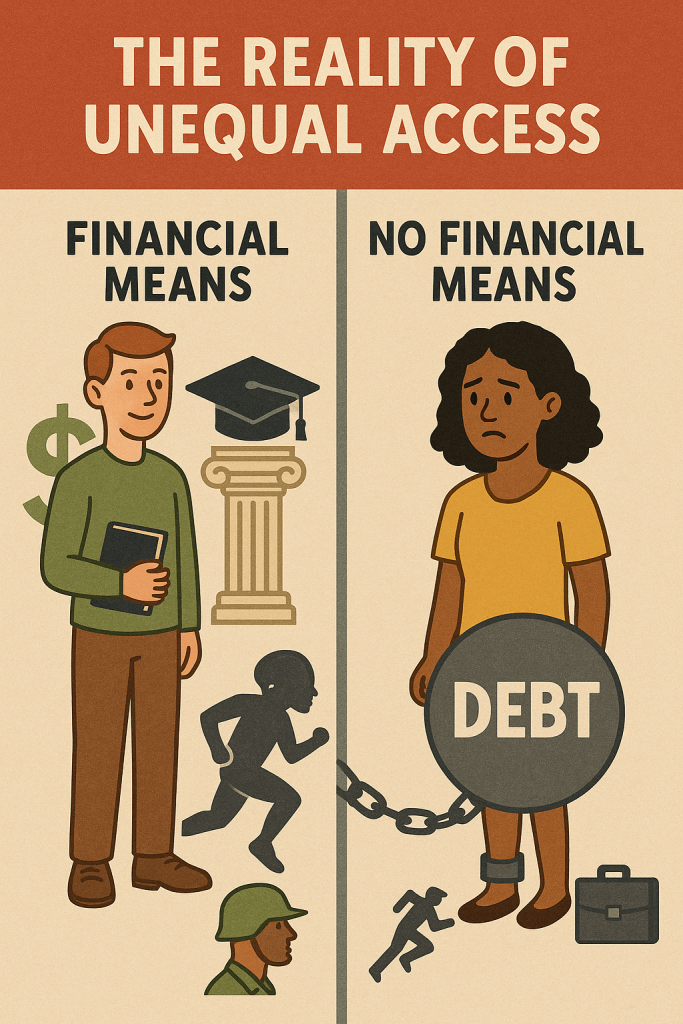
It is important to acknowledge that not every young person faces the same challenges. Some come from families with the financial means to cover college tuition and expenses without borrowing. For those students, the path to higher education looks very different, less fraught with debt and less pressured by the need to perform for scholarships or military benefits.
But this is not the reality for many. For a large portion of students, college is not accessible without taking on significant debt through student loans, personal loans, or relying heavily on scholarships that come with their own pressures and conditions. The financial burden often forces young people into impossible decisions, joining the military, chasing athletic scholarships, or entering the workforce early.
Recognizing this divide is key to understanding why programs like ASCENT and TREP matter so much. They provide a pathway for students who otherwise would be left behind by the system. They show a way forward that does not demand sacrificing your future for a chance at education.
What If We Changed the Game?
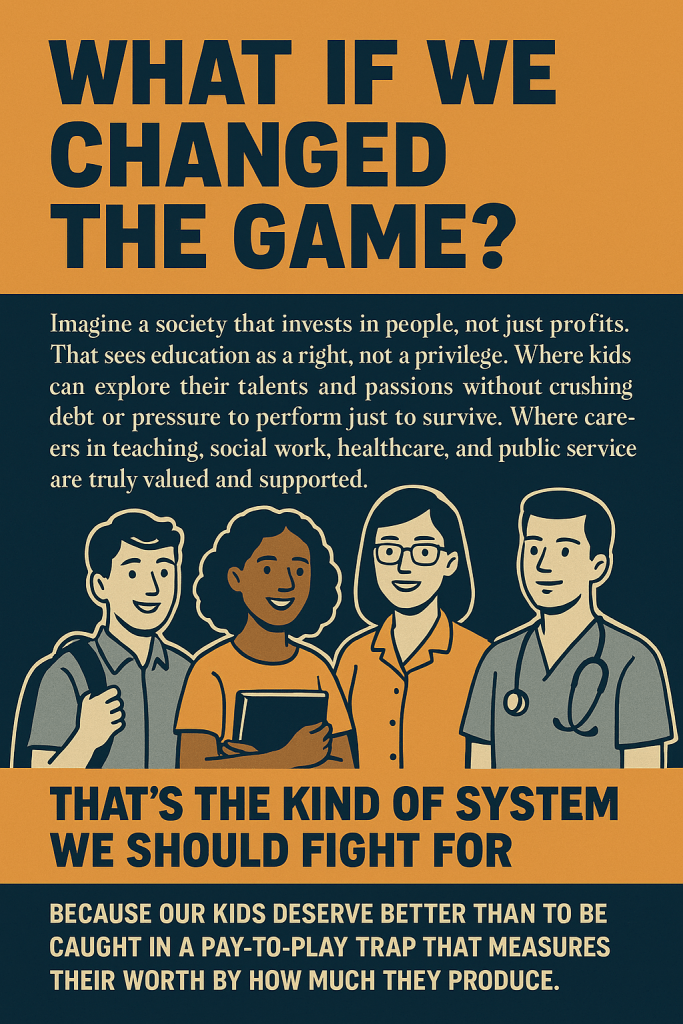
Imagine a society that invests in people, not just profits. That sees education as a right, not a privilege. Where kids can explore their talents and passions without crushing debt or pressure to perform just to survive. Where careers in teaching, social work, healthcare, and public service are truly valued and supported.
That is the kind of system we should fight for. Because our kids deserve better than to be caught in a pay-to-play trap that measures their worth by how much they produce.
We have the tools. What we lack is the will. Until that changes, the pay-to-play trap will keep deciding who gets to dream and who is forced to settle.
 GANA
GANA 
Leave a comment