The views expressed are solely those of the author in his capacity as Founder and Editor of the Global Affairs News Agency (GANA). They reflect a commitment to truth, accountability, and nonpartisan reporting, and do not represent any official position of the U.S. government or its agencies.
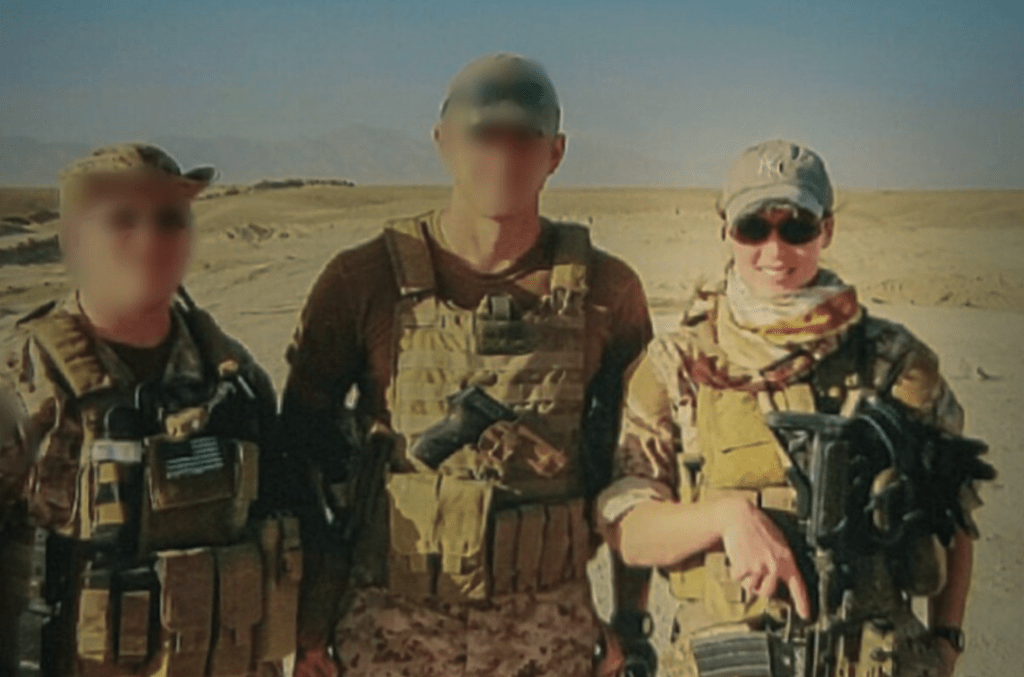
In the late 2010s, Navy Senior Chief Shannon Kent quietly broke barriers within the U.S. military. She became the first woman to graduate from the Naval Special Warfare Direct Support Course, a physically demanding program designed to prepare personnel to serve alongside Navy SEALs. She finished third in her class, outperformed many of her male peers, and deployed to some of the most dangerous combat zones in the world. She was fluent in multiple languages, worked in intelligence collection, and played a critical role in special operations missions.
Shannon did not call attention to herself or demand special treatment. She earned respect the hard way through grit, consistency, and humility. Despite her accomplishments, she faced disbelief, skepticism, and bureaucratic resistance. Some questioned her place; others delayed recognition of her achievements. Yet she showed up daily, proved herself, and let her actions speak louder than her words.
Her story represents the future of military service: inclusive, capable, and mission-focused. Her legacy is proof that fairness and excellence are not opposites but partners. Today, that legacy is under threat.
The EO System Was Built for a Reason
Equal Opportunity programs and harassment reporting systems ensure that all service members, regardless of rank, gender, race, orientation, or background, have a fair chance to serve and succeed. They provide structured channels for reporting discrimination and abuse, especially when the traditional chain of command fails to act.
Like any program, EO is not perfect. Some investigations take too long, some complaints are unsubstantiated, and others may be filed in bad faith. However, the solution is not to dismantle the system. It is to improve it, refine the process, not eliminate it, and protect those who need it, not silence them.
New Policy Changes Raise Concerns
A recent memo from the Department of Defense directs a review of EO policies, including a provision that calls for dismissing complaints lacking “actionable, credible evidence.”
On paper, this may sound like a way to streamline investigations. In reality, it raises serious concerns.
What counts as credible when misconduct happens in private, with no witnesses? What happens to anonymous complaints, often the only safe option for junior personnel? Who decides what qualifies as valid, and how do we ensure that the decision is fair and unbiased?
Without clear safeguards, these changes could discourage reporting, not because complaints are false, but because the burden of proof becomes too high, too soon, and vague.
The Risk of a Chilling Effect
A 2020 Reuters investigation found that active duty service members file harassment and discrimination complaints at significantly lower rates than civilian Department of Defense employees. The most common reason cited was fear of retaliation.
People stay quiet when leadership makes it harder to file complaints or signals that reporting will be doubted by default. This is not because abuse has stopped, but because the cost of speaking up is too high.
The risk is greatest for those with the least power. Junior enlisted troops. Women and LGBTQ+ service members. People of color. These are the same groups that EO programs were designed to protect.
Shannon Kent rose through that environment. Her strength, talent, and perseverance allowed her to thrive. But she had to fight for recognition every step of the way. Under today’s policy climate, someone like her might never make it that far.
Fairness Is Not Fragility
Let’s be clear. Demanding fairness is not weakness. Requiring accountability does not undermine discipline. If anything, it strengthens it.
Units that value transparency and equity are more cohesive, effective, and resilient. They do not tolerate abuse. They do not cover for misconduct. They build trust, and that trust fuels mission success.
Shannon Kent was not a distraction. She was a force multiplier. Her presence elevated those around her. Her example made space for others. Her legacy challenges the idea that toughness must come at the cost of inclusion.
Policy Reform Must Be Rooted in Data
If there is concern about misuse of EO programs, reform should be based on data, not anecdotes, not assumptions.
The Uniform Code of Military Justice (UCMJ) already criminalizes false statements. Those rules should be enforced, but should not become an excuse to shut down legitimate reports.
Better reform means training professional investigators, creating clear, consistent standards of evidence, and ensuring protection from retaliation, especially for junior personnel and marginalized groups.
These are not controversial fixes. They are responsible steps.
Honoring Those Who Served and Spoke Up
Shannon Kent was not just a success story. She was a proof of concept. She showed what is possible when barriers are challenged and excellence is allowed to rise. She showed that the most elite units in our military benefit when the best people are allowed to serve, no matter their background.
She died in Syria during a mission that reflected her operational value and strategic importance. Her loss was a tragedy. Her life was a model.
To see policies emerge that may have blocked her path is not just disappointing. It is unacceptable.
The Path Forward
We have a choice. We can allow fear and skepticism to define policy. Or we can protect the systems that preserve fairness and dignity in uniform.
We should ask hard questions before making decisions that impact the lowest ranks. Does this build trust? Does it encourage transparency? Does it make the military stronger or more fearful?
Shannon Kent is not here to answer those questions, but her legacy demands that we ask them and answer them with integrity.
 GANA
GANA 
Leave a comment