How Denial and Pride Destroy Communities
We think time is the enemy. But the real enemy has always been us. That was the hard lesson at the heart of The Twilight Zone episode “No Time Like the Past” (March 7, 1963, Season 4, Episode 10).
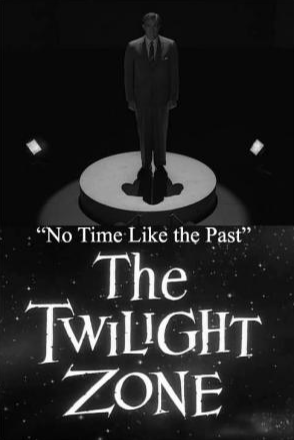
In that story, a man named Paul Driscoll, disillusioned by the violence, cruelty, and failures of the modern world, decides the only solution is to go back in time and fix it.
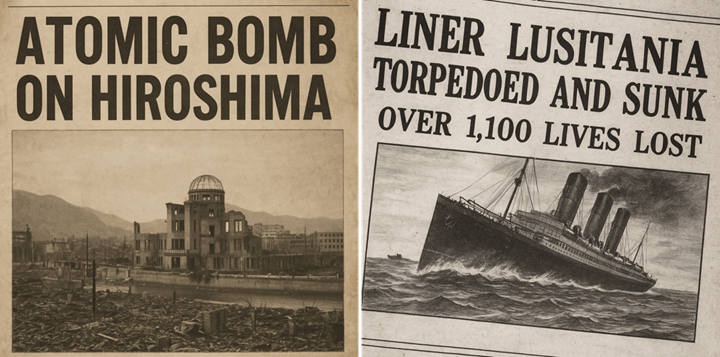
He tries to prevent Hiroshima.
He tries to assassinate Hitler.
He tries to save the Lusitania.
And he fails — every time.
Time and again, Driscoll is met with pride, denial, stubbornness, and complacency. In the end, he comes to a painful realization:
The real problem isn’t the year on the calendar. It’s human nature itself.
No matter where — or when — you go, people bring their flaws with them.
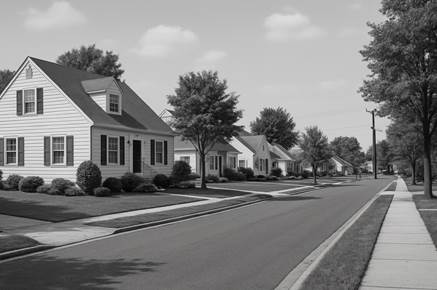
Watching it again, I couldn’t help but reflect on a situation unfolding much closer to home, right here in my own community.
For the past few months, I’ve been engaged in a difficult, frustrating battle with my local HOA.
Despite presenting clear legal evidence — court rulings, official documents — proving the HOA’s questionable status, many of my neighbors have chosen not to act.
Some have ignored the facts.
Others have clung to emotional arguments.
Still others have attacked the messenger, rather than confront the uncomfortable truth staring them in the face.
At first, it was baffling.
How could people ignore what was right in front of them?
But over time, it became depressingly clear: the facts don’t matter to people who are emotionally invested in their comfort.
Many would rather believe a convenient lie than face the disruption that the truth demands.
Pride, fear, denial — the same forces Paul Driscoll faced in the past are alive and well on my own street.
It would be easy to dismiss this as just another neighborhood squabble over dues and paperwork.
It’s not.
What’s happening here mirrors what’s happening across the entire country.
We are living in a time where facts are negotiable, where people retreat into tribes instead of facing reality, and where truth is seen as an inconvenience, not a virtue.
We see it nationally every day — but it starts small.
It starts in the places where we live.
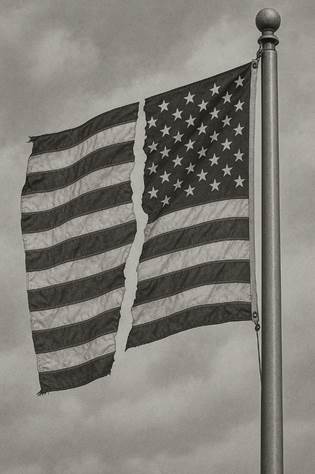
If we can’t even come together in a community of a few hundred homes —
if we can’t agree on basic facts or hold leaders accountable right here where we live — what hope do we have for uniting as a nation of hundreds of millions?
If emotional loyalty and self-interest override truth in our HOAs, in our schools, in our towns, how can we ever expect anything different at the national level?
How can we fix the country when we can’t even fix our street?
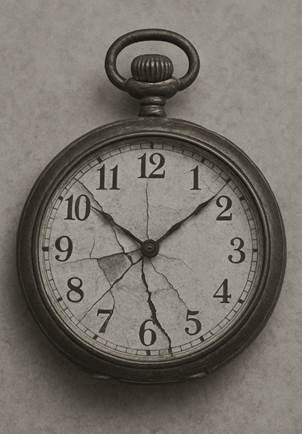
The real tragedy is that many of us still cling to the idea that “things used to be better.”
That if we just go back — to a simpler time, to a different leader, to a different system — we can fix it all.
But Paul Driscoll learned the truth the hard way, and now, so are we:
The problem isn’t the year on the calendar.
The problem is us.
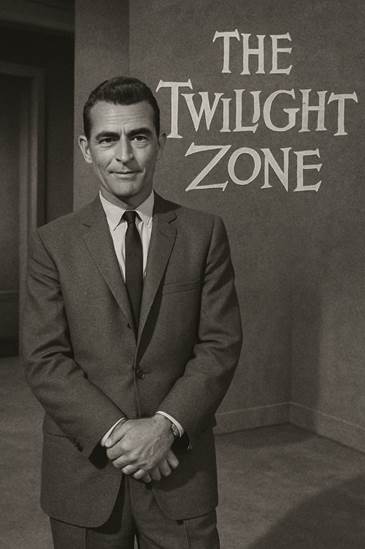
The closing narration of The Twilight Zone episode said it best:
“All yesterday holds for us is the memory of mistakes we’ve made.”
There is no golden age waiting for us in the past.
There is no perfect future waiting for us if we simply wish hard enough.

If we want to build a better future, we have to start by fixing the way we act toward each other right now, not through government, not on TV, but right here, house by house, block by block, community by community.
If we don’t, then The Twilight Zone isn’t just a piece of fiction.
It’s exactly where we’ll end up — a fractured, broken society where no time, past or future, will ever be enough to save us from ourselves.
 GANA
GANA 
Leave a comment